You're Losing People When You Speak
|
One of my ISA students, Dave, had spent 20 years making a living by talking to physicians. He was confident one-on-one. Put 5 or 6 people in a room, though, and he started watching everyone's reaction instead of finishing his thought. He'd lose the thread, stretch out his answer, and make it harder for people to follow what he was saying. If you've ever started talking before you knew your point, told a 10-minute story to answer a 10-second question, or watched someone's attention disappear while you were still warming up, you'll recognize the problem. During the coaching call, I put him through a game to work on all of those problems. It's called BLUF Rapid Fire.
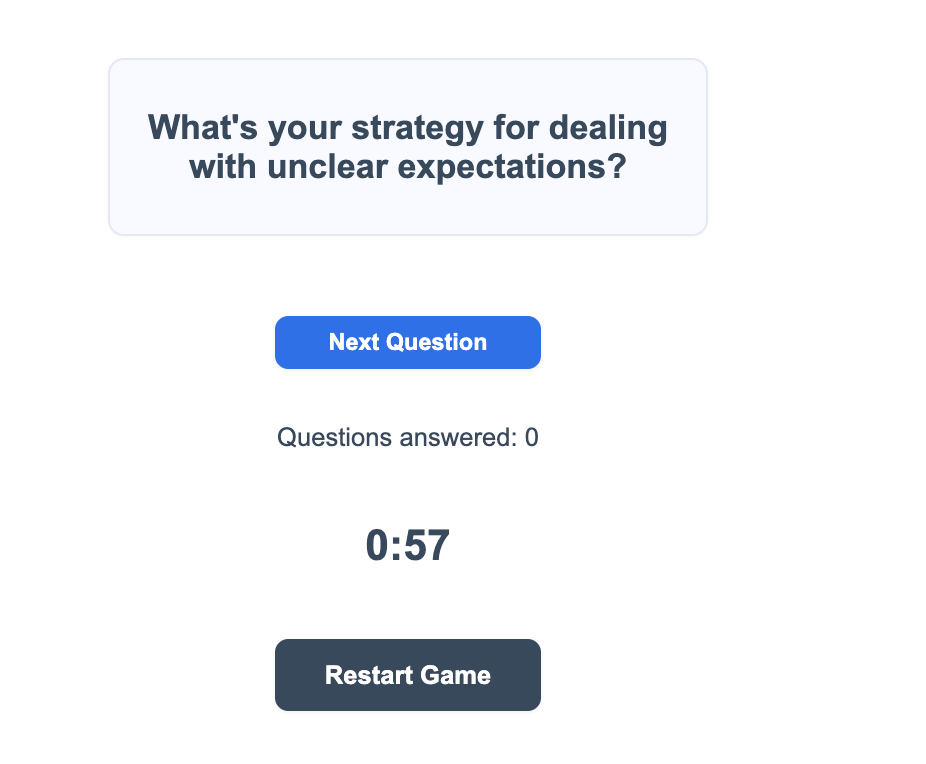
The BLUF Rapid Fire game gives you 60 seconds to answer one question before moving to the next. BLUF Rapid Fire isn't a speed test. The goal is to help you stay with the question, answer it clearly, and keep the other person with you when the pressure rises. You do that in 3 moves: answer the question in your first sentence, use the rest of your answer to support the point, and keep the conversation connected to the person in front of you. Start by finishing the sentenceSay someone asks, “How do you prepare for a meeting with senior leadership?” You could stare at the ceiling while you search for a smart answer. Or you could start here: “I prepare for a meeting with senior leadership by going through my notes and getting clear on what I want to say.” You don't need a perfect answer yet. You need a clear first sentence. Repeating the question gives your brain a short runway. It also confirms that you're answering the question in front of you, rather than the one you wish you had been asked. The first sentence carries more weight than most people realize. If you start with a long preamble, the other person has to wait for the point. If you give them the point first, they know where the rest of your answer is going. This is BLUF, or Bottom Line Up Front. BLUF doesn't mean every answer needs to be short. It means your listener gets the answer before the supporting detail. For another example of this point-first habit, read The Smart Way to Answer Hard Questions. It shows how to give the point, explain what happened, and finish with what you learned when the question is difficult. Tell the story after they know why it mattersDave was a natural storyteller. He could replay a scene in a way that made you feel like you were sitting at the table with him. His problem wasn't a lack of stories. He often started telling one before making the point clear. I told him he could ramble after he had explained why the listener should care. That distinction matters in a presentation, a sales call, and a meeting. Your story becomes useful once the other person knows what the story is helping them understand. Dave was preparing a 4 or 5-minute presentation for groups of 5 to 7 people. He had beautiful photos, a strong origin story, and years of experience behind each slide. He didn't need to say everything. He needed to choose the 1 or 2 moments he wanted people to remember, slow down there, and move quickly through the rest. The same rule applies when someone asks you a question. Answer first. Explain second. Add the story once the point has somewhere to land. Put the conversation back on themA good answer doesn't have to end the conversation. When you're speaking to a group or trying to build trust with someone, return the conversation to them with an open question. For example: “The biggest advantage of our approach is how quickly we respond to what people need. Let me explain why. Then I’d love to hear what stands out to you so far.” That last sentence gives you more information. It also keeps you from talking through the other person's reaction. In a sales call, you might ask: “What brought you here today?” In a presentation, you might ask: “Which part of this stands out to you the most?” In a meeting, you might ask: “What would be most useful for us to solve first?” Your answer gives the conversation direction. The follow-up question keeps it connected to the person in front of you. When you don't know the answerThe same habit works when you're unsure. You can say: “I have an answer in mind, but before I share it, what made you ask that?” Now you have a moment to find the question behind the question. You might learn that they were asking about timing, not price. Or risk, not effort. Your answer will be better because you took the time to understand what they meant. Practice it with a timerDave's improvement came from short, repeated reps. Not another hour of watching videos about confidence. Try this once a day: 1. Set a timer for 60 seconds. 2. Read a random question out loud. 3. Repeat the beginning of the question and finish the sentence. 4. Give 1 example, then end or ask a follow-up question. At first, this will feel robotic. That's fine. You are teaching yourself to reach for the answer before you reach for every detail around it. When the habit is strong, your answer will sound more natural. You'll also notice when you're drifting away from the question, because you'll have started with a clear point. The next time someone puts you on the spot, don't search for the most impressive answer. Finish the sentence. If you found this helpful, you'll like The Impromptu Speakers Academy. It's my 20-day program for professionals who want to organize their thoughts and speak clearly in high-pressure moments. You'll practice this skill with daily exercises, frameworks, and live coaching. It also includes live monthly group coaching calls for you to get direct feedback from me and practice sessions. Preston P.S. Want to hire me to train your team? Fill out this short form: |
The Impromptu Speakers Newsletter
Join 10K+ professionals subscribed to The Impromptu Speakers Newsletter every Tuesday for tips, frameworks, and resources to become a clear, confident, and compelling speaker. I'm the Head of Biz Dev @ Lucid Software, a communications coach, and have 700K+ followers on social media.